
Water storage the right way.
Nothing lost to evaporation.
Water held in the sand and gravel beneath Colorado's river valleys, inside a wall sealed to bedrock. Nothing on the surface changes.
See how it works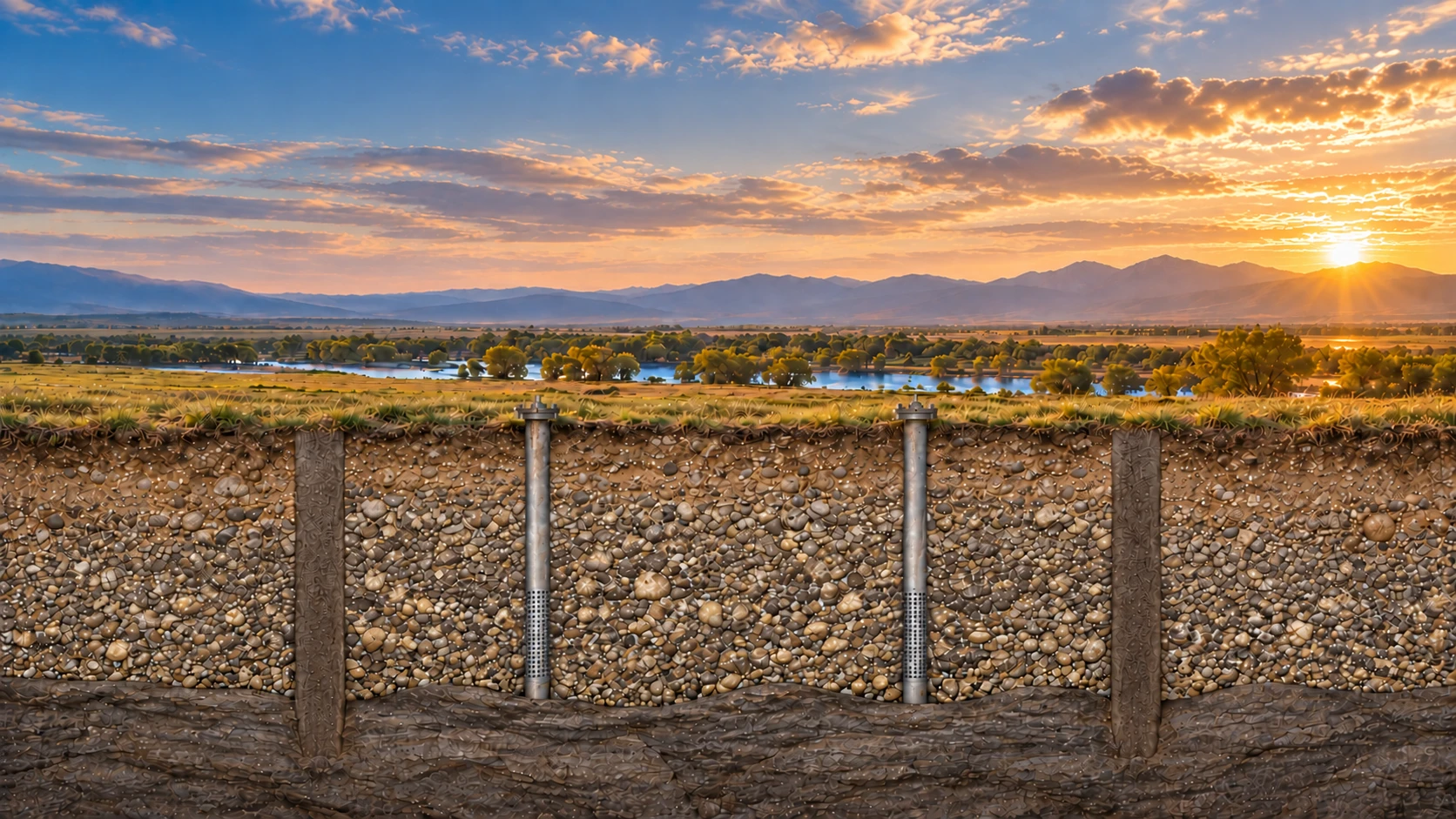
Nothing lost to the sky. Water stays in the system instead of the sky
No surface area lost. No acres flooded, no ground taken out of use
No stream sections lost. The river stays a river
The numbers
$5,000–$10,000
Per acre-footof storage
Less than 10% of the cost of traditional surface water storage*
One Front Range town now puts its water from a new reservoir project at $85,000 to $95,000 an acre-foot, before bond interest doubles it.†
About a year
From agreementto operation
0 acre-feet
Lost to evaporation,every year
* Per acre-foot of storage, compared with traditional surface water storage. As presented at the 2024 Subsurface Water Storage Symposium, CSU Spur.
† Town of Erie, on its share of the Northern Integrated Supply Project, as reported by Fresh Water News (Water Education Colorado), June 10, 2026. Source
Why underground
A surface reservoir loses the water it was built to keep.
Open water evaporates. On the Front Range that's three to four feet of depth a year, off every acre of reservoir surface. Nobody gets to use that water. It's gone to the sky, to non-beneficial use.
Across a whole reservoir it adds up fast.
~1,000
Surface acres on a single Front Range reservoir
~4,000
Acre-feet lost to evaporation every year
$100M+
Of water-right value, gone
On a replacement project, the water you stop losing pays for the storage.
How it works
A reservoir with no open water.
Colorado's river valleys sit on deep beds of sand and gravel. The pore space in that sand and gravel can hold a great deal of water. Wall off a section of that gravel down to bedrock and you have a reservoir, with the land on top still in use.
There's no cavern. The water fills the spaces in the gravel the way it fills a sponge.
- 01
Seal it.
A bentonite slurry cutoff wall is trenched down through the gravel and keyed into the bedrock or clay below. The water inside is isolated from the groundwater around it.
- 02
Fill it.
In wet years, when there's water to capture, wells put it into the gravel. Vertical wells, horizontal wells, or both, sized for high flows.
- 03
Hold it.
The water sits in the pore space in the sand and gravel, stored within the slurry wall boundary. No open surface, so nothing evaporates and no sediment builds up.
- 04
Use it.
In dry years the same wells pump it back out for treatment and delivery.
Saturated gravel, bedrock below
What it means
Water. Money. Time. Land.
Water
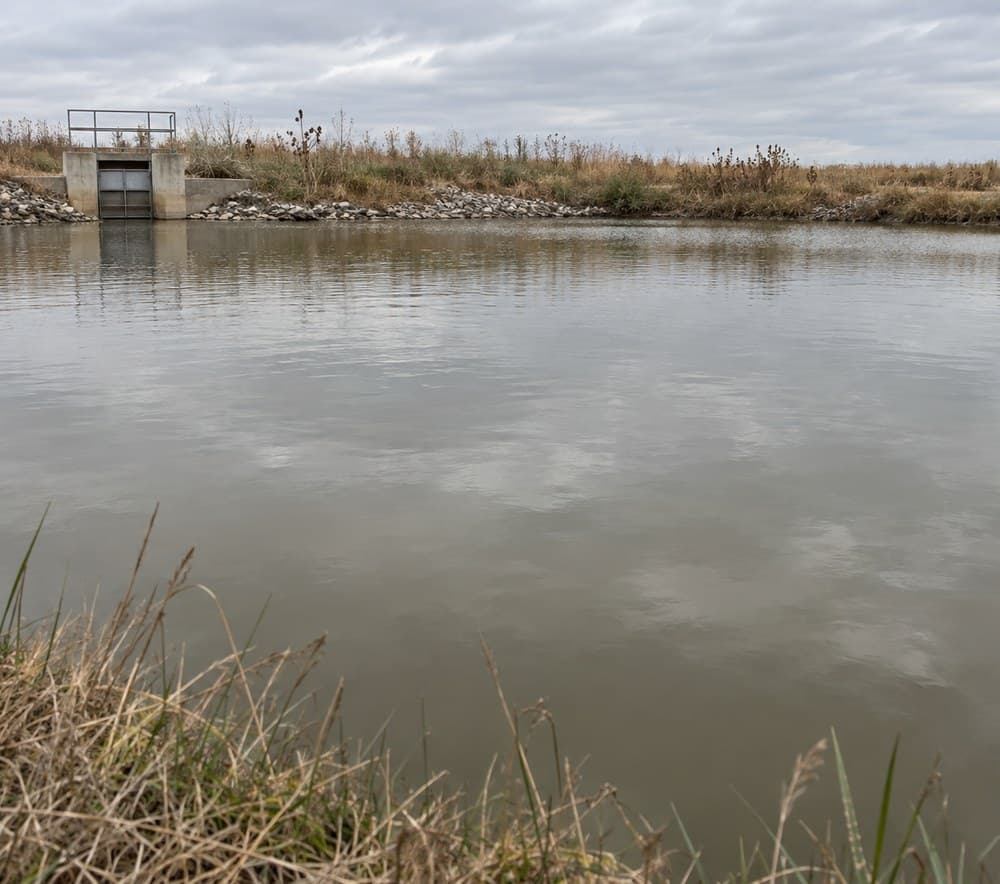
No evaporation
The loss that pays for the project doesn't happen.
Money
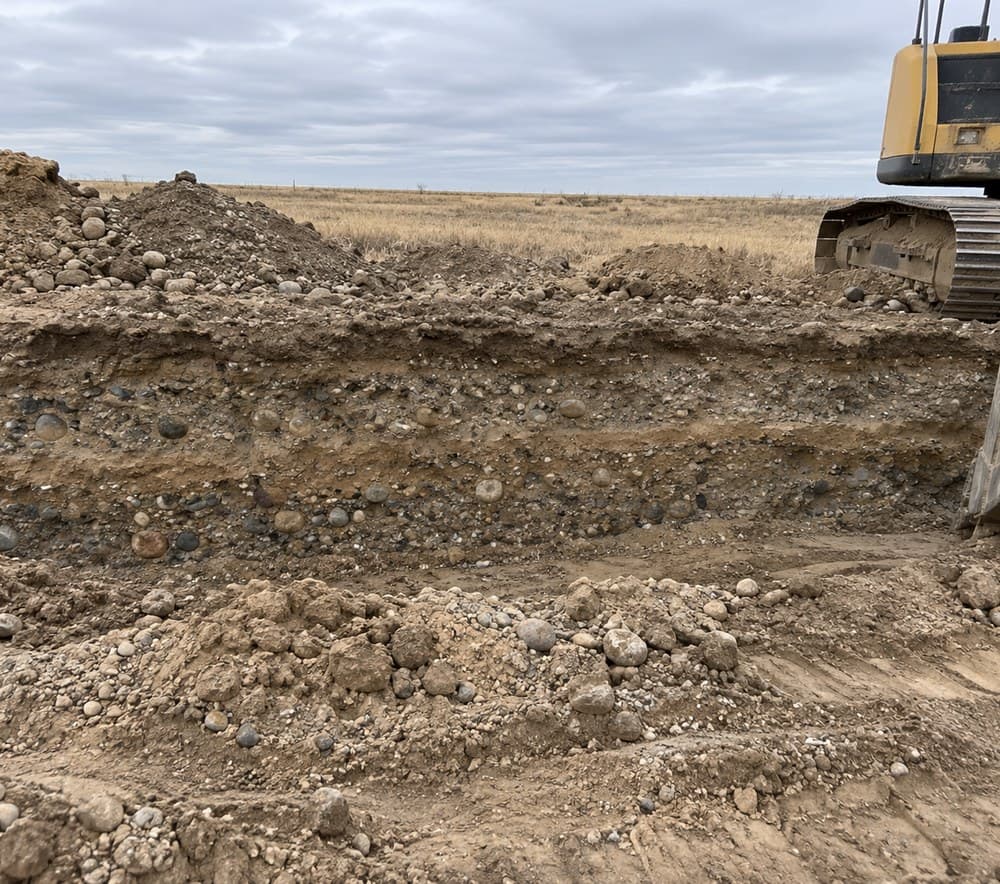
A fraction of the cost
No dam, no spillway, no reservoir to build.
Time
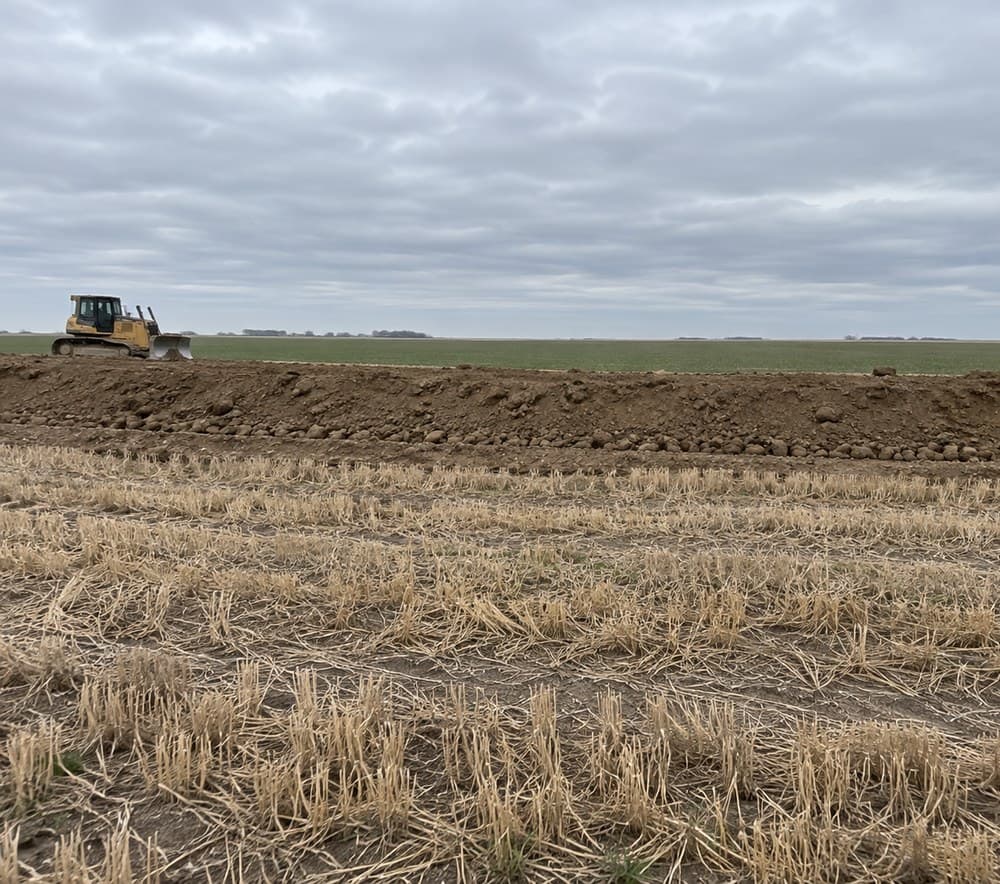
Months, not years
No EPA permitting, and clear State Engineer guidelines, so permitting is straightforward.
Land
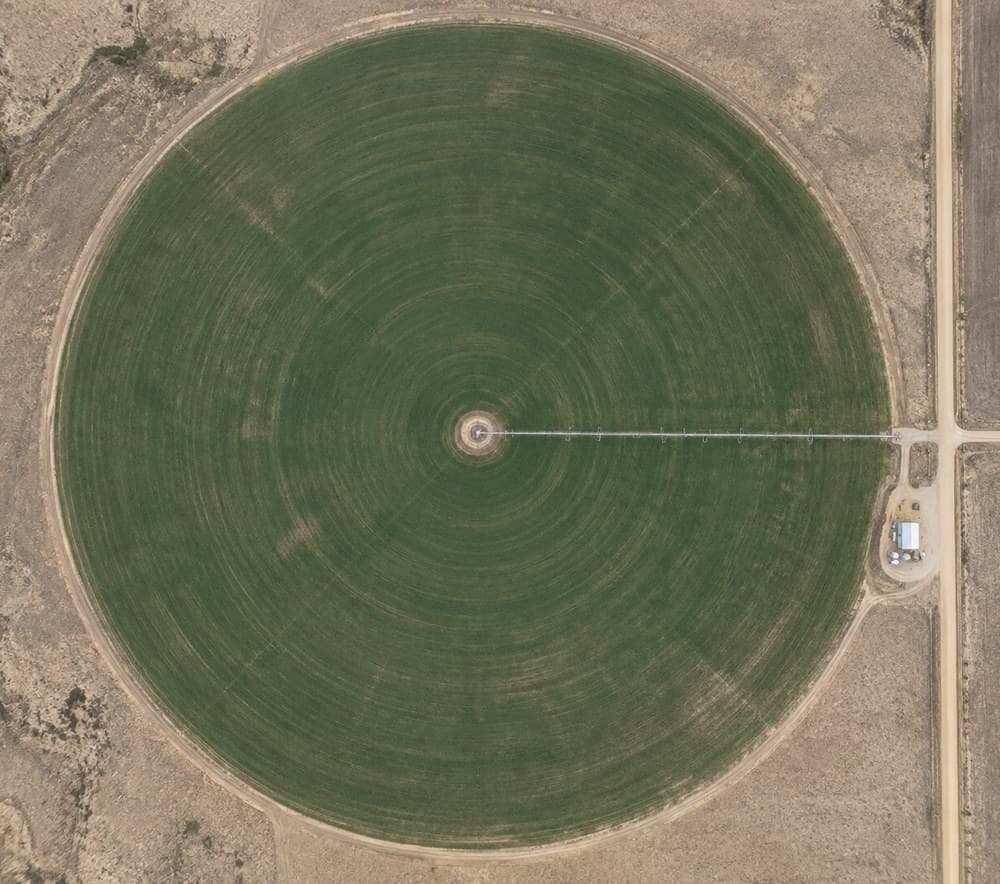
The surface stays
The ground above the storage stays in production: farmed, grazed or left open.
Where it fits
Alongside the reservoirs you have, or instead of the next one.
Subsurface storage can replace a new surface reservoir, or it can work next to existing ones, taking water they can't hold and freeing up space in them.
Municipal water providers
Storage for return flows and reusable water, and a place to catch free-river water when it's available instead of watching it leave the state.
Agriculture and augmentation
Augmentation water held close to where it's needed, on ground that stays in production.
Existing reservoir systems
Fill in wet years. Draw on it in dry years for base demand, and save surface water for when it's needed most.
Modular
Storage can be built one cell at a time, sized to the need and the budget, and expanded later.
Reliability
Nothing on the surface to wear out.
- No storage lost to sediment over time
- No debris from wildfire runoff
- Minimal maintenance
- Minimal surface facilities: little to secure, little to see
- Isolated from the regional groundwater
- Works in a wide range of alluvial valleys
Slurry-wall containment is not new. A bentonite cutoff wall at a Laramie, Wyoming facility has been operating since 1986.
Who's behind it
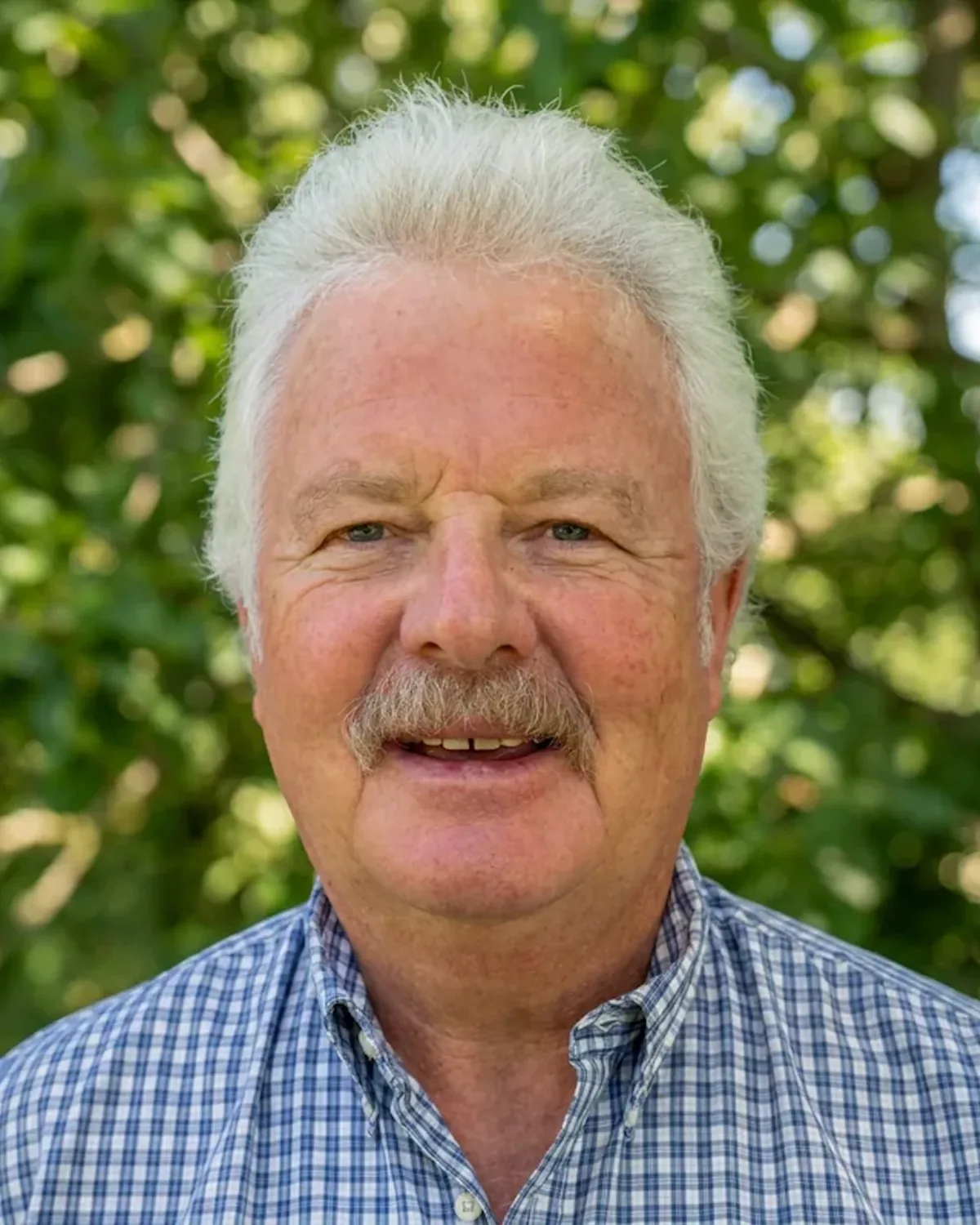
Courtney Hemenway, P.E.
Managing Partner · Subsurface Water Storage, LLC
Courtney has spent 45 years putting water into the ground and getting it back out. A Colorado native with bachelor's and master's degrees in civil engineering from Colorado State, he has been a licensed Professional Engineer in Colorado since 1984. He worked at Wright Water Engineers and CH2M Hill, and has run Hemenway Groundwater Engineering since 1996.
He has been the engineering lead on more than ten aquifer storage and recovery projects in Colorado, worked on legislation for subsurface water storage, co-invented equipment used in the field, and helped lead three western U.S. symposia on subsurface storage. When the State Engineer's office writes the rules for this kind of work, he's one of the people they call.
“Why are we building reservoirs that evaporate water to non-beneficial use?”
That question started at CH2M Hill decades ago. Subsurface Water Storage, LLC was formed in 2011 to answer it. Courtney isn't interested in locking the idea up. He wants to see it built, here and by others, because it's the right thing to do.
Start a conversation
Have storage you need to find?
If you're planning storage, or looking for somewhere to put water you're entitled to but can't hold, Courtney would like to hear about it.
- Location
- Parker, Colorado